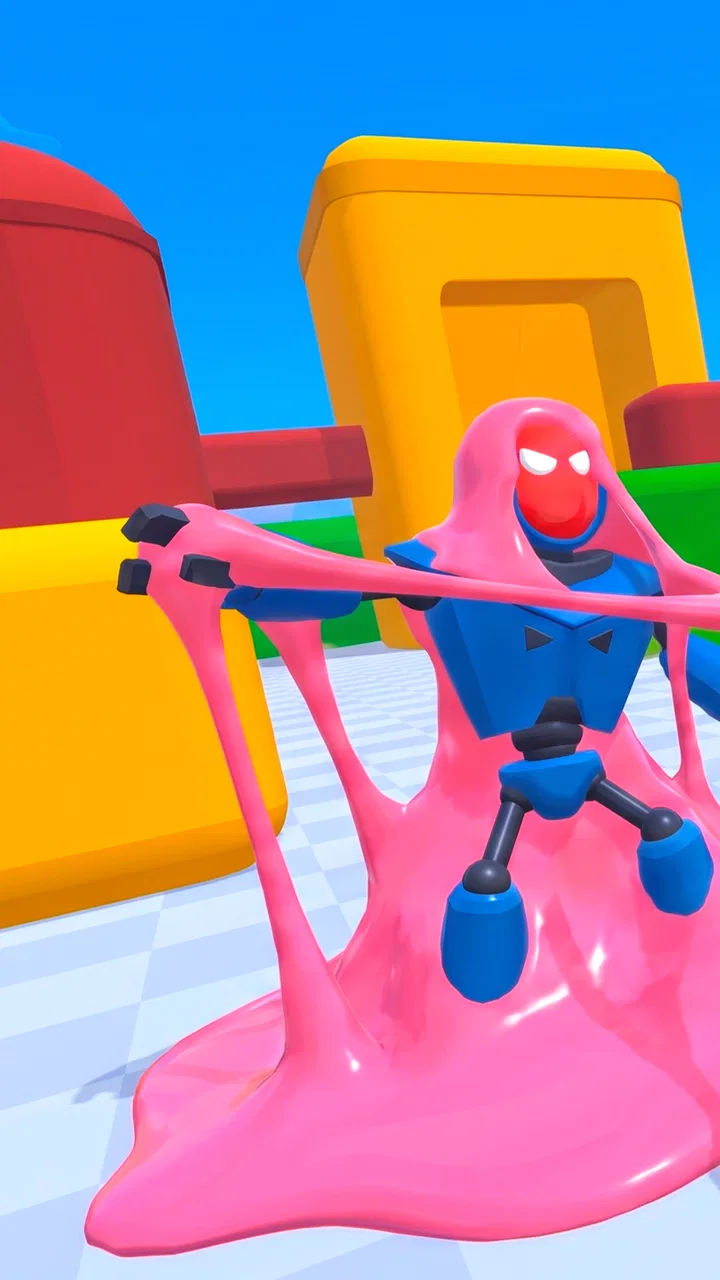
Tear Them All: Robot Fighting
- 4.5
- Rating
- 10.00M
- Installs
- Free
- Price
 Analysis by App-foxy
I spent time with Tear Them All: Robot fighting expecting a quick action game, and that is exactly where it makes the most sense. It puts the focus on immediate robot combat rather than a long story, complicated menus, or a deep role-playing system. You get into a fight, aim at mechanical enemies, clear the immediate threat, collect the satisfaction of finishing the encounter, and then decide whether you want another round. That simple rhythm is the heart of the experience.
It is a free action game from Freeplay Inc, aimed at players who want something easy to start on Android rather than a demanding, long-form adventure. The game has a Teen content rating, so it is better suited to older children and adults than to very young players. I also found the short-session design useful when I only had a few minutes available, although it is less convincing if you are searching for a complex campaign or a highly competitive multiplayer experience.
How the robot-fighting loop feels in practice
I find the robot-fighting loop easiest to enjoy when I treat each encounter as a self-contained burst rather than expecting a long campaign to unfold around it. That makes it handy for a spare moment, while also giving me a clear way to notice when repetition starts to outweigh the fun. Before settling into that rhythm, I’d check a few practical basics so the first session feels fair.
You May Also Like

 Blood Strike: 2.5 Anniversary
Blood Strike’s Loadouts Turn Every Drop Into a Tactical Gamble
A close look at Blood Strike’s custom loadouts: how fast access to signature weapons reshapes its battle royale rhythm, rewards preparation, and narrows the gap between fights.

 Pandora - Music & Podcasts
Pandora’s Music Is Easy to Start, but Harder to Recover
Pandora’s strength is its low-effort path from a seed to a station. Its weak spot is how much confidence it asks you to place in connection, setup, and quiet recovery.

 8 Ball Pool
 Is Built on Rivalries, Rematches, and Routine
A close look at the rivalries, rematches, shared routines, and unanswered safety questions that turn a quick pool match into a persistent mobile community.

 Samsung Music
’s Quiet Strength Is Playing What You Already Own
Its reach comes less from spectacle than from dependable access to a personal library. That simplicity is both the app’s strongest retention engine and its ceiling.

 AccuWeather: Weather Radar
AccuWeather Review: A Quick, Clear Forecast for Everyday Decisions
For everyday plans, the best forecast is the one you can understand quickly. AccuWeather makes rain timing, radar, and local conditions easy to act on, with a few trade-offs.

 Hill Climb Racing
Why Hill Climb Racing Still Turns Crashes Into One More Run
A tiny car, a bumpy hill and one more upgrade: Hill Climb Racing keeps resurfacing because its simple chaos makes every near-miss feel personal.
More From Our News Desk



The first action is deliberately immediate
The strongest part of the opening experience is how quickly the game gets to its central idea: fight robots with shooting action. There is no need to learn a large collection of systems before enjoying the basic encounter. The appeal comes from seeing a mechanical target, responding to it, and watching your attack produce a clear result. That direct connection between what I do and what happens on screen gives the game an approachable feel.
This is important for a mobile action title. On a phone, I do not always want to study a long tutorial or remember several buttons before the first meaningful moment. Here, the premise is easy to understand. The enemies are machines, the objective is to destroy them, and the action is built around that immediate confrontation. It is a good fit for someone who downloads games during a spare moment and wants to play rather than prepare.
The simplicity also creates the first major trade-off. If you enjoy discovering elaborate character builds, complicated weapon interactions, or a large narrative world, the initial attraction may fade quickly. The game’s identity is not based on a broad set of genres layered together. Its identity is the act of tearing through robot opponents, so your enjoyment depends heavily on whether that focused loop remains satisfying.
I would recommend starting with short sessions instead of judging it after one rushed attempt. The first encounter tells you whether the controls and visual feedback feel comfortable on your device, but the more useful question is whether you enjoy repeating the same basic action with small changes in the situation. This is a game to evaluate by rhythm, not by story depth.
Why the feedback rhythm matters
Good action games make the result of every input easy to read, and this one depends on that principle. A shot should feel connected to the target, a damaged robot should look meaningfully affected, and a defeated enemy should provide a clean sense of progress. When those elements line up, even a straightforward encounter can feel active rather than empty.
In my experience, the game works best when I concentrate on the immediate threat instead of trying to turn every moment into a strategy exercise. The pleasure comes from reacting, firing, clearing space, and moving toward the next objective. That gives the action a compact pulse: notice the enemy, attack, receive visual confirmation, and use the result to decide what to do next.
That rhythm is also why the title can work as a break-time game. A person waiting for transport, taking a short pause between tasks, or relaxing before bed can understand the situation quickly. There is no requirement to remember a large plot thread before returning. The action itself provides the context.
However, players should not confuse quick readability with unlimited variety. A clear shooting response is valuable, but it cannot carry the entire experience forever if encounters begin to feel too familiar. My advice is to pay attention to how often the game gives you a fresh reason to adjust your approach. If you need constant novelty, a larger action game with exploration or a more elaborate progression system may be a better choice.
The reward is the feeling of clearing the threat
The immediate reward is not just winning. It is the compact satisfaction of removing a visible danger from the screen. Robot combat naturally supports that feeling because the enemies are easy to understand as targets: they are obstacles between me and a successful finish. Every completed exchange reinforces the idea that my actions are making the situation safer and more manageable.
I like this kind of reward when I want a game that does not demand emotional investment. There is no need to become attached to a large cast or follow a complicated plot. The reward is functional and physical: I acted, the robot was defeated, and the encounter moved forward. That makes the game accessible to players who prefer action over narrative.
The free entry point helps with that accessibility. You can try it without paying upfront, while optional in-app purchases range from $2.99 to $5.99 per item. I would treat those purchases as a personal choice rather than part of the reason to install the game. My preferred approach with a free action title is to play long enough to understand whether the basic combat is enjoyable before spending anything.
This is one of the practical decisions a new player may wonder about: should you buy something immediately to improve the experience? I would say no. First test the unmodified loop. If the shooting, enemy feedback, and short-session structure already work for you, then you can decide whether an optional item adds enough value. If the basic action does not hold your attention, a purchase is unlikely to solve the underlying problem.
The game’s popularity suggests that the straightforward idea has found an audience. It has an average rating of 4.4 from around 26 thousand ratings and has passed 10 million installs. Those figures do not replace personal testing, but they do indicate that the robot-shooting concept has broad mobile appeal. I would still interpret that popularity carefully: a widely installed game can be a good casual fit without being the right choice for someone seeking depth.
Resetting after a session keeps the loop approachable
The most useful way to understand the game is to see each attempt as a small cycle rather than as one enormous commitment. I enter the action, respond to robots, enjoy the feedback from successful attacks, and reach the point where the current challenge ends or the next attempt becomes more attractive. That reset is what makes another session easy to begin.
Short resets are valuable on mobile because interruptions are normal. I may need to put the phone down without warning, and a game built around compact action is less frustrating in that situation than a long mission that expects uninterrupted concentration. When I return, I can focus on the next fight instead of reconstructing a complicated chain of events.
There is a downside to the same design. A reset can feel motivating when I want a quick repeat, but it can also expose a lack of long-term purpose. If the reason to start again is only “there are more robots,” the loop needs strong enough combat feedback to remain interesting. Players who prefer persistent worlds, detailed missions, or a sense of building a character over a long journey may find the reset structure too light.
For everyday use, I would place it in the category of a convenient filler game rather than a primary gaming destination. It is suitable for a short break when I want direct action, but I would not choose it as my only mobile game if I wanted a broad range of activities. Keeping that expectation clear makes the experience more enjoyable.
What makes the loop different from usual action alternatives
Compared with a traditional console-style action game, this title is easier to approach but less likely to provide the same sense of scale. A larger action game may offer exploration, a developed story, more elaborate controls, and longer missions. Tear Them All: Robot fighting instead concentrates on the satisfying part of confronting mechanical enemies. That makes it more convenient, but also more dependent on the quality of its repeated encounters.
Compared with a puzzle game, it asks for a faster response and provides a more direct physical payoff. You are not mainly arranging pieces or planning several moves ahead. Compared with a role-playing game, it puts less emphasis on managing a long-term identity. The correct comparison is therefore with other quick mobile shooters and robot-themed action games, not with a full-scale adventure.
That distinction helps answer who should skip it. I would look elsewhere if you want a rich campaign, competitive social systems, deep tactical planning, or a game that constantly changes its rules. I would also skip it if you dislike repeated combat against mechanical targets. The theme is not a small decoration; it is the reason the game exists.
On the other hand, it suits players who enjoy a clear objective and a short route to action. Someone who likes firing at targets, watching enemies break down, and moving through compact challenges may find the focus refreshing. It is especially appealing if you prefer learning one central interaction well rather than juggling many unrelated mechanics.
Small habits that make each attempt feel better
My first practical tip is to play with a clear purpose for the session. Instead of opening the game without knowing what I want, I use it for a short burst of action and stop when the loop begins to feel repetitive. This prevents a quick game from becoming a chore. The reward is strongest when I keep the session close to the reason I opened it.
Second, I pay attention to the moment when the feedback stops feeling satisfying. That moment is useful information, not a failure. If the action still feels responsive, another attempt may be worthwhile. If I am firing mechanically without caring about the result, switching to another activity is probably better. This is a simple way to avoid confusing progress with enjoyment.
Third, I would test the game on the device and control setup you actually plan to use before making any purchase. Mobile action depends on comfort, screen size, and how naturally the controls fit your hands. A game can be entertaining in principle and still feel awkward on a particular phone. Testing the free version first is the sensible workflow.
Finally, I would not install it expecting a story-heavy robot universe. The game’s strength is the action-feedback-reward cycle, not a promise of elaborate world-building. Approaching it with that expectation makes its focused design feel intentional instead of incomplete.
Version, access, and who it suits best
The current version is 1.41.1, and the game runs on Android 6.0 or later. That relatively broad system requirement makes it practical for many Android users who are not carrying the newest phone. Even so, the real test is how comfortably the action runs on your specific device, especially if you are sensitive to touch response or visual clutter during combat.
Because it is free to start, the commitment is low. The Teen rating should guide families when deciding whether it is appropriate for a younger player, and the optional purchases are worth keeping in mind if the phone is shared. I would make sure the person using the device understands that free access and optional spending are separate choices.
The game is a strong candidate for an action fan who wants a quick robot-fighting session, a player who dislikes long tutorials, or someone who enjoys repeating a clear combat loop until the satisfaction wears off. It is a weaker candidate for a reader looking for a deep single-player campaign, extensive exploration, or a carefully developed narrative.
My verdict on starting another session
What keeps me returning is the compact sequence: enter the fight, react to the robots, see the attack produce a result, finish the immediate threat, and decide whether the next round sounds fun. That sequence is easy to understand and well suited to the stop-and-start nature of phone gaming. It does not ask me to make a large commitment before giving me something to do.
My reservation is equally clear. The loop has to remain enjoyable on its own because the game is not the right place to search for every kind of action-game depth. If you need a large story, extensive customization, or a constantly changing structure, another title will serve you better. The focused design is both the reason to play and the boundary of the experience.
Overall, I would recommend it to a friend who says, “I want to shoot robots for a few minutes and get straight into the action.” I would describe it as a convenient, accessible free action game rather than a complete replacement for a larger shooter. Try the basic combat first, keep purchases optional, and judge it by whether the feedback still makes you want to begin one more session. If that answer stays yes, the repeatable robot-fighting loop is doing its job.
FAQs for Tear Them All: Robot Fighting
01What is the main gameplay concept of Tear Them All: Robot Fighting?
Tear Them All: Robot Fighting is an action-packed game where players control customizable robots in intense combat scenarios. The main objective is to defeat opponents using a variety of weapons and tactics. Players can upgrade their robots with new parts and abilities to enhance performance and adapt to different fighting styles.
02Is Tear Them All: Robot Fighting free to play?
Yes, Tear Them All: Robot Fighting is free to download and play. However, it offers in-app purchases that allow players to buy additional resources, upgrades, and cosmetic items. These purchases can enhance gameplay but are not necessary to enjoy the full experience of the game.
03What platforms is Tear Them All: Robot Fighting available on?
Tear Them All: Robot Fighting is available on both Android and iOS platforms. Players can download the game from Google Play Store for Android devices and the App Store for iOS devices. Ensure your device meets the minimum system requirements for optimal gameplay performance.
04Does Tear Them All: Robot Fighting require an internet connection?
While Tear Them All: Robot Fighting can be played offline, certain features like multiplayer modes and updates require an internet connection. Playing online enhances the experience by allowing players to compete against others globally and access new content regularly.
05How does the upgrade system work in Tear Them All: Robot Fighting?
The upgrade system in Tear Them All: Robot Fighting allows players to enhance their robots with new parts, weapons, and abilities. Players earn in-game currency through battles, which can be used to purchase these upgrades. Strategically choosing upgrades helps players tailor their robots to match their preferred fighting style and improve combat effectiveness.
Pros
- Engaging and dynamic combat mechanics.
- Variety of customizable robot parts.
- Smooth and immersive graphics.
- Regular updates with new content.
- Intuitive controls for easy gameplay.
Cons
- In-app purchases can be pricey.
- Occasional lag in multiplayer mode.
- Limited storyline depth.
- Requires constant internet connection.
- Ads can be intrusive at times.

Tear Them All: Robot Fighting
Gallery